GadgetMall AI studio

AI that sounds like you and works like your team.

Focused AI products for hospitality, commerce and social, with a human in every loop that matters.

Gadget Hospitality

Your hotel, answering on WhatsApp. Your team, still in charge.

Guest messages are understood, routed to the right department and held for approval when they're sensitive. No app to download.

Gadget

One brief in. Every channel out.

Calendar, captions, visuals and publishing in your brand voice for Instagram, TikTok, LinkedIn, Facebook, X and your blog.

Brand voice quality gate

If it sounds like AI, it doesn't ship.

Every draft passes a brand-voice check and a cliché filter, and learns from what you approve and reject.

Gadget Visibility

Be the answer, not just a search result.

Pages structured for Google and for the AI assistants your guests and customers now ask first.

  • GadgetMall AI Transformation

    We transform your business and website with AI.

    We assess your workflows, website and data sources, then build and implement an AI roadmap tailored to your business. From strategy and integration to team training, we work with you through the transformation.

    Plan your AI transformation with us
    AI-ready websites
    Content structure, SEO and visibility in AI answers, with intelligent assistants integrated into your site.
    Connected workflows
    Integrate CRM, ecommerce and content tools, and automate repetitive work.
    Business-specific AI assistants
    Customer support, sales and internal knowledge assistants grounded in your information sources.
    Training and measurement
    Team training, access controls, human approval and performance measurement to track results.

    Assessment → Roadmap → Integration → Training and improvement

What we sell

Focused tools, not bloated platforms.

We build small, commercial-grade systems that solve clear business problems: generate social content, sync products, monitor reputation, manage tasks and improve visibility across search and AI answer engines.

Each product can stand alone, while the GadgetMall family gives growing teams a connected operating layer when they need it.

GadgetSocial

Not a scheduler. A complete content engine.

Gadget-Social doesn't just queue up posts — it writes them in your brand voice, grounds them in real source material, checks them against your brand rules, and publishes to every connected channel.
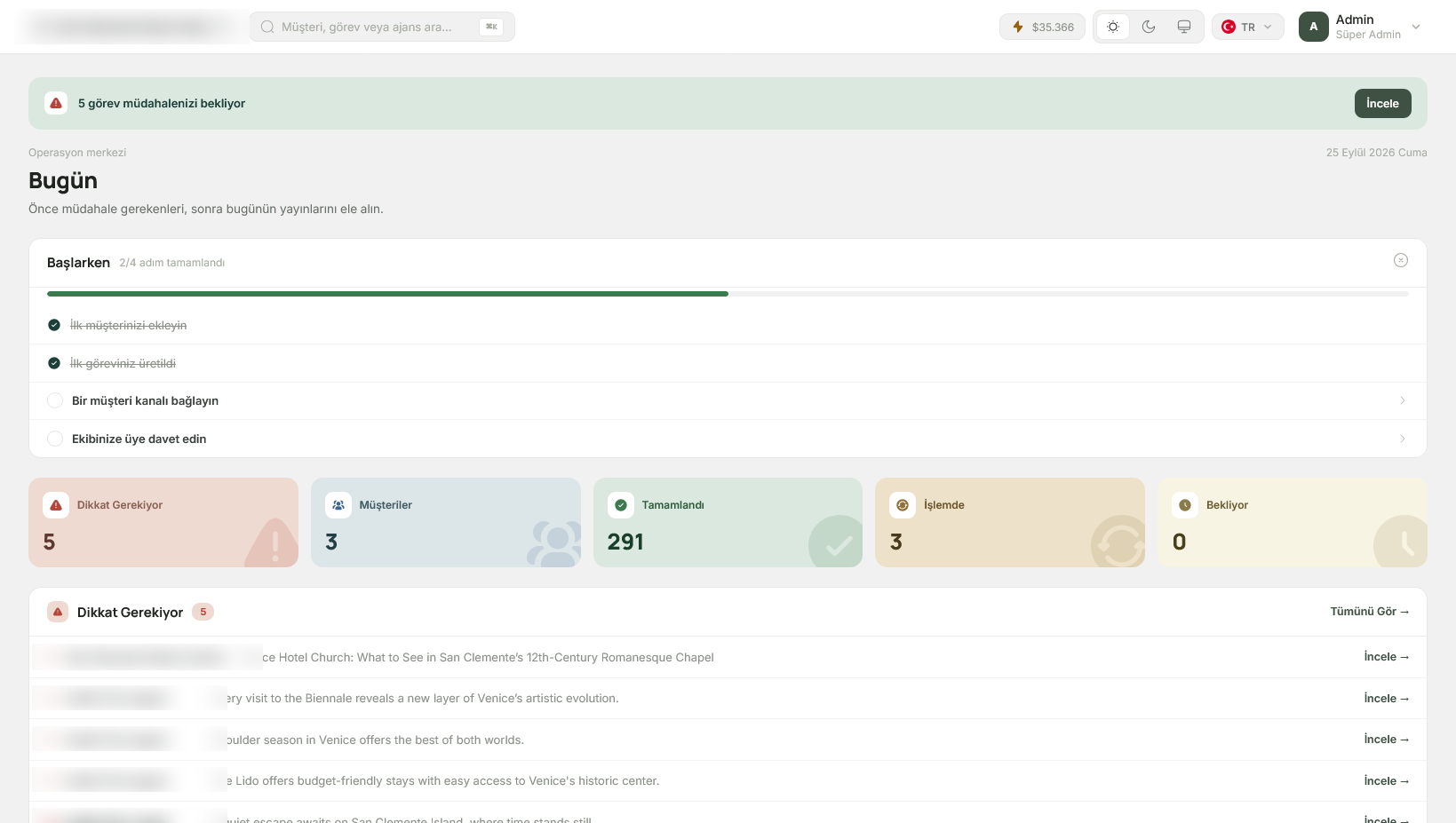
Gadget-Social operations dashboard showing today's tasks, review queue and quotas

Writing that sounds human, not AI

Every draft passes a brand-voice quality gate before it ships — no generic openers, no AI clichés, nothing that doesn't sound like you.

Context-aware smart post creation

Posts are grounded in your real brand facts, product pages and source content — not a blank prompt — so every draft is grounded in something true.

SEO blogs, written and published for you

Long-form, search-ready articles matched to real source material and published straight to WordPress or Wix — no separate blog workflow needed.

Publish everywhere from one place

One workspace, every channel. Approve once, and Gadget-Social handles the rest — sized, formatted and scheduled for each platform.

Autopilot

From one brief to a full content plan.

Gadget-Social plans the calendar, writes every post in your brand voice, generates the visuals, checks them against your brand rules, and publishes to every connected channel — then reports back on what worked.

Learn more

Everywhere your audience is

Connect everywhere your audience is.

Native APIs, brand-correct sizing and per-platform scheduling rules — connect a channel once, and Gadget-Social takes it from there.

Instagram Facebook TikTok X LinkedIn WordPress Wix

Everything else that comes with it

  • Brand voice memory that improves with every approved post
  • Multi-client and multi-brand workspaces
  • Image and video generation built in
  • Approval workflow before anything goes live
  • Usage and performance tracking per client

Simple plans, your AI

Start small. Publish everywhere when you are ready.

Connect your own AI provider and keep model costs under your control. Every plan keeps a human approval step before content goes live.

How we do it — see every step

GadgetSocial BYOK

Starter

$5/ month

7-day free trial

  • Bring your own AI API key
  • One daily post per platform
  • Daily Meta stories and regular Reels
Start free
Meta plan

GadgetSocial Meta

Instagram and Facebook, covered daily

$9.99/ month

7-day free trial

  • Bring your own AI API key
  • Daily Instagram and Facebook content
  • Two Reels every week
Choose Meta
Launch price

GadgetSocial Pro

Publish across every major channel

$14.99/ month

Regular price $19.99

  • Instagram, Facebook, TikTok, LinkedIn and X
  • Three short videos every week
  • Creative Copilot for guided revisions
Choose Pro

AI provider usage is billed by your chosen provider. Your API key stays encrypted. No credit card is required for the trial.

GadgetSocial BYOK · Starter

A practical daily publishing system with your own AI.

Start lean, keep model costs in your hands and approve every piece before it is published.

$5/ month · 7-day free trial
Production rhythm

Consistent, without overload

  • One daily feed post per connected platform
  • One daily Instagram and Facebook story
  • One Reel every three days
  • Up to 250 publications per month
AI and media

Your provider, your bill

  • OpenAI, Claude, Gemini, OpenRouter, Groq, Grok, Mistral, NVIDIA, Qwen and Hugging Face
  • Image support through OpenAI, Imagen and Firefly
  • Video providers include fal.ai models
  • Encrypted customer-owned API keys
Workflow and control

Human approval stays in charge

  • One workspace and up to two members
  • Brand voice and reusable content context
  • Approval before anything goes live
  • Platform-aware content preparation
Storage and integrations

Keep the media workflow flexible

  • Google Drive media-library support
  • Customer-managed storage preferred
  • Social connection capacity for up to six accounts
  • Usage and publishing records in one workspace

GadgetSocial Meta

A focused content engine for Instagram and Facebook.

Build a dependable Meta presence with daily publishing, stories and a sustainable short-video rhythm.

$9.99/ month · 7-day free trial
Production rhythm

Made for Meta consistency

  • One daily Instagram feed post
  • One daily Facebook feed post
  • One daily story on each Meta platform
  • Two Reels every week
AI and media

Choose the tools you trust

  • Connect supported text, image and video AI providers
  • Bring your own API keys and control model costs
  • Generate captions, campaign variants and creative briefs
  • Prepare visual assets for Meta formats
Workflow and control

Review every creative

  • Human approval before publishing
  • Content calendar and campaign planning
  • Brand voice guidance across both channels
  • Revise content before it reaches the queue
Storage and integrations

Work from one media library

  • Google Drive media-library support
  • Customer-managed storage preferred
  • Instagram and Facebook publishing workflow
  • Central usage and publishing history

Best for teams whose audience and sales activity are concentrated on Meta.

Choose Meta

GadgetSocial Pro · Launch price

Plan once, adapt intelligently and publish everywhere.

Run a five-channel calendar with more video, guided AI revisions and one controlled approval workflow.

$14.99/ month · regular price $19.99
Production rhythm

Full cross-channel cadence

  • One daily feed post on Instagram, Facebook, TikTok, LinkedIn and X
  • One daily Meta story
  • Three short videos every week
  • Up to 300 publications per month
AI and media

A broad provider ecosystem

  • Eleven supported AI provider families
  • Text, image, vision and video workflows
  • Bring your own API keys and choose models by task
  • Google Drive media-library support
Creative Copilot

Ask for a change in plain language

  • Guided revisions inside the approval screen
  • Up to 30 AI revision requests each month
  • Version-bound approval prevents stale content from publishing
  • Review the proposed changes before applying them
Workflow and control

One source of truth

  • One workspace and up to three members
  • Brand voice, content planning and performance records
  • Channel-aware formatting from one campaign
  • Human approval before every publication

Launch pricing applies while available. Provider API charges remain under your account.

Choose Pro

Product Pages

GadgetMall products, each with a focused role.

Choose a product to open a focused product page inside the same website.

01

GadgetSocial

Social Media Management & Production

Gadget-Social gives brands and agencies one practical workspace for planning, producing and preparing social media content without scattering work across documents, chat threads and calendar tools.

Best for

  • Agencies managing multiple brand calendars.
  • Ecommerce teams that need steady campaign content.
  • Small teams that want repeatable social production without a large content department.

Core workflow

Open the visual walkthrough
  • Set up the client workspace — create a client profile with a brand voice definition: tone, visual vibe, video style, and an explicit “avoid” list.
  • Connect accounts and define a publish schedule — link social accounts and set frequency, publish hour, content language, media type and hashtag count.
  • Automated task generation — a scheduled job reads each client's active publish schedules and creates the day's or week's content tasks automatically, with duplicate protection.
  • AI creative generation with brand context injected — multiple distinct concepts are produced per request, each with a hook, a shot breakdown, a caption, a music direction and a CTA, built from that client's brand profile.
  • Automated quality gating before any human sees it — text, images and video each pass a scored rubric and an AI-cliché blocklist; video gets an automated storyboard check.
  • Platform-correct formatting applied automatically — images and video are auto-cropped and resized per destination, including face/subject-aware smart cropping.
  • Human review on a Kanban board — content lands in a review board with columns, cards, assignees and attachments; a reviewer approves or rejects with notes.
  • Feedback becomes memory, and results close the loop — approved and rejected examples are stored per client and pulled back into future prompts, while weekly performance metrics inform the next cycle.

What it helps with

  • Weekly and monthly social calendar planning.
  • Campaign content generation from approved brand context.
  • Post repurposing for Instagram, LinkedIn, TikTok, Facebook and similar channels.
  • Cleaner handoff between strategist, designer, client and publisher.

What makes it different

  • Not locked to one AI vendor. Credential resolution falls back through up to seven levels across providers — a rate limit or a dead key on one provider doesn't stop production.
  • Fail-closed quality gates, not “generate and hope.” Nothing reaches a human queue without passing a scored rubric and, for visual media, an automated review pass.
  • It learns the specific client, not a static brand kit. Actual approval and rejection history is replayed into every new generation as concrete examples.
  • Built on the same multi-tenant, billable foundation the rest of the business runs on — organizations, workspaces, plan entitlements and billing are part of the same system.

How teams use it

A boutique social agency running 12 client accounts logs into one system where each client keeps a separate brand voice profile and, if needed, a separate AI credential — while a shared review board lets a strategist, a designer and one approving account manager work through the same weekly queue.
A DTC brand with an active blog connects its blog feed; instead of pulling “recent posts” as loose inspiration, it matches one not-yet-promoted article to one upcoming post per cycle, so social and blog content stop ignoring each other.
A single marketing hire at a small hospitality group sets a schedule of 3 posts and 2 stories per week, lets Monday's draft batch generate overnight, and spends their time on a focused approve/reject pass instead of a blank caption field.

Works with

  • Publishing & metrics: Instagram, Facebook, LinkedIn, TikTok, YouTube, X
  • AI providers: OpenAI, Anthropic Claude, Google Gemini, Meta Llama, DeepSeek, fal.ai, Adobe Firefly, Imagen, DALL·E
  • Blog/CMS: Wix, WordPress, client blog feeds
  • Notifications: Telegram, email

FAQ

Does it work for an agency managing multiple clients under one login?

Yes — the system is built around organizations and workspaces so an agency can operate several client workspaces from one account, each with its own settings and credentials.

What happens if our AI provider goes down or hits a rate limit mid-generation?

The credential resolver automatically falls back through client-, tenant- and admin-level configuration before a default key, so a single broken credential doesn't halt production for everyone.

Can every client keep a different tone of voice on the same account?

Yes — each client has its own brand voice profile, and every generation for that client pulls from that specific profile.

What stops the AI from writing the same overused phrases every brand uses?

Caption and long-form output are checked against a blocklist of clichéd phrases before being marked ready for review.

Is there an audit trail for what was approved or rejected, and why?

Yes — review actions capture notes, and rejected examples are stored and reused as negative examples in future generations for that client.

Does it produce video, or only static posts?

It produces short-form video concepts with a scene breakdown, hook and music direction, and runs an automated storyboard check before marking video ready for review.

02

GadgetCommerce

Marketplace Automation

Gadget-Commerce helps ecommerce teams control marketplace listings, catalog updates and operational tasks across channels, so product work becomes easier to review, repeat and scale.

Best for

  • Stores selling the same products on more than one channel.
  • Teams maintaining WooCommerce, Etsy, eBay and similar marketplace catalogs.
  • Operators that want fewer manual listing and pricing updates.

Core workflow

  • Connect marketplace and storefront accounts (Etsy, eBay, WooCommerce initially) and pull in the current catalog from each.
  • Normalize product data into one internal record per product, mapping each channel's own fields instead of letting versions drift apart.
  • Flag likely duplicates or near-duplicates before they cause conflicting stock counts or split sales history.
  • Prepare cleaner listing drafts — titles, descriptions, attributes, images — for review, rather than pushing AI-generated changes live directly.
  • Route pricing, stock and description changes through an approval step before anything is pushed to a live marketplace.
  • Push approved changes to each channel's native API and record per-channel sync status in one place.
  • Keep stock levels centrally visible so a sale on one channel is reflected against availability everywhere else.
  • Surface a recurring task queue of listings that need attention, connected to the same task/ownership layer as the rest of the family.

What it helps with

  • Product listing preparation and catalog cleanup.
  • Marketplace-specific title, description and attribute work.
  • Recurring listing updates, pricing checks and channel tasks.
  • Reducing repeated manual work across ecommerce systems.

What makes it different

  • Prepare-and-review, not blind real-time sync. Overselling and mismatched SKUs are among the most common complaints about existing multichannel tools; a review step comes before anything goes live.
  • Sized for smaller catalogs, not just high-volume sellers. The intent is to stay useful for a shop with dozens of SKUs, not only thousands.
  • One operating layer, not a standalone sync utility. Listing work connects back to the same task/ownership system as the rest of the GadgetMall family.
  • A control layer in front of native tools, not a replacement for them. It prepares and controls changes before push — it doesn't try to replace each marketplace's own seller dashboard.

How teams use it

A small jewelry brand selling the same ~80 SKUs on Etsy and its own WooCommerce store wants one place that shows both channels' stock status and flags a mismatch before a customer orders something already sold out elsewhere.
A reseller onboarding a new eBay account against an existing WooCommerce catalog wants to be warned when a product they're about to list already exists under a slightly different title, instead of accidentally creating a duplicate.
An agency managing five small ecommerce clients wants one weekly queue of listings that need attention across all five, instead of logging into five separate marketplace dashboards every morning.

Works with

  • Marketplaces: Etsy, eBay, WooCommerce initially, with room for Amazon and Shopify
  • Data: CSV import and export for bulk catalog work
  • Cross-product: recurring listing work feeds Gadget-Tasks; new-product launches feed Gadget-Social for content

FAQ

Will it prevent overselling across channels?

A central stock view — so a sale on one channel is reflected against availability everywhere else — is a core planned goal, given how often overselling comes up as a complaint in this category.

Does it require identical SKUs across every platform?

Not strictly; the direction includes matching by SKU and by title similarity, since inconsistent SKU naming is one of the most common causes of cross-channel sync failures.

Can it warn me before I create a duplicate listing?

Duplicate detection across channels is part of the planned direction, informed by how often sellers report splitting one product's history across duplicate listings.

Will changes push automatically, or do I get to review first?

The safer planned default is prepare-then-approve, not silent auto-push, especially for pricing and stock.

Which marketplaces come first?

Etsy, eBay and WooCommerce are the initial planned focus, matching what most small sellers already use, with room to add channels later.

Is this meant to replace my marketplace's own seller dashboard?

No — the intent is a preparation and control layer in front of each channel's native tools, not a replacement for them.

03

GadgetReputation

Crisis Management

Gadget-Reputation is designed for moments when reputation risk needs structure: signals, messages, response ownership and consistent action before a small issue becomes harder to control.

Best for

  • Hotels, restaurants, service businesses and ecommerce brands.
  • Agencies responsible for public-facing client communication.
  • Teams that need earlier warnings around reviews, comments and urgent messages.

Core workflow

  • Connect review and feedback sources — Google Business Profile, review sites, social comments, contact-form and support messages.
  • New signals flow into a single stream instead of five separate inboxes and dashboards.
  • Each signal is classified for urgency, sentiment and likely reputation impact.
  • High-urgency signals are flagged and routed to an owner automatically, based on category.
  • A response draft is suggested, matched to a relevant playbook for that situation type, for the owner to adapt — not auto-posted.
  • The owner approves and sends, or edits first; nothing public goes out on a sensitive signal without a human decision.
  • The handled situation and its outcome are saved back into the playbook library, so a similar situation next month starts from a stronger response.
  • A rolling view tracks response time, open versus resolved signals, and recurring complaint themes over time.

What it helps with

  • Earlier detection of reputation and customer-experience risks.
  • Consistent response drafts for sensitive public messages.
  • Clear ownership when an issue needs quick action.
  • Post-incident learning through saved patterns and response history.

What makes it different

  • Coordination and ownership, not just alerts. The category is full of “we'll notify you” monitoring tools; this is about who owns the response and what happens next.
  • Assisted response, not automatic posting. Especially for sensitive issues, the safer default stays human-approved drafts rather than auto-published replies.
  • Builds a reusable playbook from real situations, instead of static generic templates — each handled incident sharpens the next response.
  • Sized for smaller, multi-property or multi-client operations — aimed at hospitality, service and ecommerce teams and the agencies serving them.

How teams use it

A 40-room boutique hotel's GM wants to know within the hour if a review mentions something serious like a hygiene complaint, not find out from a corporate email three days later — with a suggested first-response draft ready rather than writing from scratch at 11pm.
An agency handling public-facing communication for six restaurant clients wants one view of which client has an unanswered negative review sitting for over 24 hours, instead of relying on each client to check their own listing.
An ecommerce brand mid-shipping-delay wants a cluster of angry comments on one product post treated as one situation with one owner and one consistent tone, rather than five staff replying five different ways.

Works with

  • Review sources: Google Business Profile, TripAdvisor and similar sites, app store reviews
  • Social: Instagram and Facebook comments and DMs
  • Direct: contact forms, support and helpdesk messages
  • Cross-product: shares incident history with Gadget-Tasks; recurring themes can point Gadget-Visibility toward a content gap

FAQ

Does it post responses automatically?

The safer default is assisted response preparation and approval, especially for sensitive issues — not automatic posting.

Can it tell a minor complaint apart from something serious?

Classifying urgency and likely reputation impact is core to the planned direction, so a small gripe isn't treated the same as a safety claim.

Does it cover more than just reviews?

The direction covers reviews, social comments, form submissions and support messages as different signal sources feeding one stream.

Who decides who responds to what?

Suggested ownership and routing based on signal type is part of the design, so response responsibility isn't left ambiguous.

Can more than one person work an incident without duplicating replies?

Coordinated ownership — a clear owner and visible status — is a stated design goal, aimed at preventing conflicting responses.

Is this only for hotels?

The planned direction covers hotels, restaurants, service businesses and ecommerce brands, plus the agencies representing them.

04

GadgetVisibility

Search and AI Answer Model Optimization

Gadget-Visibility helps teams prepare pages, product knowledge and service content for visibility across search engines, answer engines and AI discovery surfaces.

Best for

  • Product, service, hospitality and ecommerce websites.
  • Teams that want to be understood by search engines and AI answer systems.
  • Brands with useful knowledge that is not yet structured clearly enough online.

Core workflow

  • Crawl and audit key pages — product, service, FAQ, hospitality pages — for search intent match, missing entities and unclear offers.
  • Score each page against what both a search engine and an AI answer engine would need to understand and confidently cite it.
  • Identify FAQ and content gaps — real questions customers likely ask that the site doesn't answer clearly anywhere.
  • Generate a practical content brief for each gap found, prioritized by likely impact — not finished copy.
  • Optionally draft improved copy or FAQ answers for human review, following the brief — never auto-published without review.
  • Check structured data and answer-friendly formatting specifically needed for AI answer engines, not just classic SEO.
  • Track what's been improved versus still open across the site over time, instead of a one-off audit that goes stale.
  • Periodically re-check visibility signals as content and the competitive landscape shift.

What it helps with

  • SEO and answer-engine content planning.
  • FAQ, comparison, service and product knowledge expansion.
  • Making pages easier for humans and AI systems to understand.
  • Improving visibility without turning the website into low-quality bulk content.

What makes it different

  • Goes beyond classic SEO into AI answer visibility. Dedicated tooling now tracks how ChatGPT, Perplexity, Gemini and AI Overviews cite or ignore a brand, separately from keyword and backlink SEO.
  • Briefs and gaps, not bulk AI-written pages. The direction is practical, reviewable content improvement — explicitly avoiding turning a site into low-quality bulk content.
  • Built for product, service and hospitality sites specifically, not a generic enterprise SEO suite.
  • Tracks improvement over time as one system, instead of producing a one-off audit that's outdated within a quarter.

How teams use it

A hospitality brand's marketing lead knows their FAQ page is thin but doesn't know which specific questions are costing them visibility in AI answer engines — they want a prioritized list of what to add, not a generic “improve your SEO” report.
An ecommerce brand with strong products but vague category pages wants to know which pages read as unclear to a search or answer engine, and get a content brief for each — not a blanket instruction to add more keywords.
An agency running SEO for several small clients wants one recurring view of what's fixed versus still outstanding per client, instead of re-running a one-off audit every few months.

Works with

  • CMS/site platforms: Wix, WordPress, general HTML sites via crawl
  • Data sources: Google Search Console, sitemap and RSS for content inventory
  • Cross-product: content-to-fix items feed Gadget-Tasks; gaps found here can become Gadget-Social content ideas

FAQ

Does it replace tools like Ahrefs or Semrush?

No — the direction is complementary, focused specifically on answer-readiness and structured content gaps rather than backlink or keyword-rank tracking.

How is this different from a generic AI content generator?

Output is meant to stay practical, reviewable and brand-aligned — briefs and structured improvements, not bulk auto-published pages.

Can it tell me if my brand shows up in ChatGPT or Perplexity answers?

Tracking presence and citation across AI answer engines is part of the planned direction, following where the broader AEO tooling category is heading.

Do I need to understand schema markup to use it?

The intent is to surface what's missing in plain terms, not require prior technical knowledge.

Will it flag thin or duplicate content on my existing pages?

Identifying weak answers and unclear offers on existing pages is part of the planned audit scope.

Is this only useful for large sites?

No — it's aimed at the product, service, hospitality and ecommerce sites GadgetMall's customers actually run, not enterprise-scale sites.

05

GadgetTasks

Task Manager

Gadget-Tasks keeps recurring work, owners, deadlines and execution status in one clear operating layer for teams that need follow-through more than another complicated project system.

Best for

  • Teams with repeatable client, content, marketplace or operations work.
  • Small businesses that need clarity without enterprise project-management overhead.
  • Operators who want tasks connected to real business workflows.

Core workflow

  • Build a reusable task template for a recurring process, such as weekly content approval or new client onboarding.
  • Apply the template to generate real task instances with owners and deadlines pre-filled from the template's defaults.
  • Assign or reassign owners per task, with visibility into who's overloaded.
  • Track status through a small set of practical states — not-started, in progress, blocked, waiting for approval, done.
  • Surface what's blocked or late automatically, so a manager doesn't have to click into every task to find out.
  • Route approval-dependent tasks to the right approver and notify them, closing the loop once approved or rejected.
  • Tie tasks back to their source — a content task links to the Gadget-Social item it came from, a listing task to the Gadget-Commerce product.
  • Review completed and recurring task history to spot which processes are consistently late or blocked, and adjust the template.

What it helps with

  • Recurring operational checklists and daily execution.
  • Client-facing handoffs, approvals and service tasks.
  • Clear responsibility when multiple people touch the same process.
  • Keeping practical work visible without overbuilding the system.

What makes it different

  • Built around recurring operational work, not generic project management. Templates for repeatable processes and practical ownership — not Gantt charts or dependency webs most small teams never touch.
  • Fewer, clearer statuses. Complexity and a steep learning curve are a consistent reason smaller teams switch away from tools like ClickUp; this stays deliberately narrower.
  • Connected to where the work actually happens. Tasks link back to content, listings and reputation work across the other GadgetMall products, instead of living as a disconnected to-do list.
  • Client-facing by design. Recurring client checklists, handoffs and approvals are treated as first-class use cases, not bolted on to an internal-only tool.

How teams use it

A small agency's ops lead runs the same onboarding checklist for every new client — kickoff call, brand brief, account setup, first content batch — and wants one reusable template instead of copy-pasting a checklist every time.
A hotel's department heads need to see, at a glance, which recurring tasks — linen inventory, weekly deep clean, license renewals — are late across departments, without opening an enterprise tool frontline staff will never use.
An ecommerce operator juggling content, listing updates and customer follow-ups wants one place showing what's overdue across all three types of work, instead of three separate tools each showing its own slice.

Works with

  • Notifications: email, Telegram
  • Cross-product: Gadget-Social (content approval tasks), Gadget-Commerce (listing and update tasks), Gadget-Reputation (response and incident tasks)
  • Data: CSV import and export for existing checklists

FAQ

Can I create a task once and reuse it every week or month?

Yes — reusable templates for recurring processes are a core part of the planned direction.

Does it support subtasks or dependencies like Asana or ClickUp?

The direction favors staying intentionally simpler than full enterprise PM tools; deep dependency chains aren't the current focus.

Can clients see or act on their own tasks?

Client-facing handoffs and checklists are part of the planned use cases, aimed at agencies with recurring client work.

How will it connect to the rest of GadgetMall?

Tasks are meant to link naturally back to content, marketplace and reputation workflows over time as the product family matures.

Is it meant for solo users, or only teams?

Both — a single person juggling several types of recurring work is as much a target as a multi-person team.

Will it notify people when something is overdue or blocked?

Surfacing what's blocked, late, or waiting for approval automatically is a stated design goal.

06

GadgetHospitality

Hospitality AI Operating System

Gadget-Hospitality coordinates guest communication, staff response and hotel operations in one system built around the channels people already use — WhatsApp for guests, Telegram or WhatsApp for staff, and a web panel for management.

Best for

  • Hotels and hospitality brands that want faster, more natural guest communication.
  • Teams that want to avoid forcing guests to install a native app.
  • Properties that need staff and management coordinated in one operating layer.
WhatsApp-first guest communication No app required for guests PMS-aware hotel operations Human approval before sensitive replies

Core workflow

  • Property and department setup — a property configures its settings and department structure (housekeeping, front desk, F&B) plus delivery preferences per department.
  • Guest context loads automatically — as a reservation becomes active, a Guest 360 profile assembles stay details, room, preferences, VIP status and history in one place.
  • The guest reaches out on a channel they already use — via WhatsApp directly, or the web-based Guest Hub reached by link or QR code, no app install required.
  • The message is risk-classified before anything is sent back — every outbound reply must pass an approval gate and a channel-policy check before it can actually be sent.
  • A task is created and routed to the right department — low-risk requests can be handled with a fast, largely automated path; anything else becomes a task in the relevant inbox.
  • Staff act from the channel they're already in — frontline staff can accept, start, complete, block or escalate a task with a short chat command from Telegram or WhatsApp.
  • Shift handover keeps context alive — a Hotel Shift Board carries handover notes summarizing open tasks, VIP flags and pending replies for the next shift.
  • Managers watch the whole picture and close the loop — KPI views cover arrivals, departures, open tasks, pending replies, VIPs and revenue actions; offers are held back while a guest has an open recovery case.

What it helps with

  • Faster guest response without a native app download.
  • Clear separation between everyday chat and formal, sensitive communication.
  • Coordinated staff response across shifts and channels.
  • One operational view for management instead of scattered tools.

What makes it different

  • Staff work from tools they already have open. Task acceptance, status changes and escalation happen via Telegram or WhatsApp chat commands, not a new app to install and remember.
  • Nothing automated reaches a guest ungoverned. Every outbound message passes an approval gate and channel-policy check first — a deliberate contrast to chatbots that auto-send with no checkpoint.
  • Commerce is reputation-aware. Offers and upsells automatically hold themselves back during an open service-recovery case.
  • Built around a property's real PMS relationship, not a bolt-on chat widget — designed to complement an existing PMS rather than replace or fight it.

How teams use it

A boutique property's night-shift front desk agent gets a WhatsApp message at 11pm asking for extra pillows. It's classified as low-risk, the housekeeping task drafts automatically, and the on-duty housekeeper closes it with a single reply from their own phone.
A GM preparing for a VIP repeat guest's arrival opens that guest's 360 profile beforehand and sees their preferences from the last stay and a flagged note from a prior service-recovery case, instead of piecing it together from old email threads.
A revenue manager reviewing offers each morning sees that a guest currently under an open service-recovery hold is automatically excluded from a paid upsell offer until that case is resolved.

Works with

  • Guest-facing: WhatsApp, web Guest Hub (check-in, hotel guide, requests, offers, messages, feedback)
  • Staff-facing: Telegram, WhatsApp, web admin dashboard, task board, shift board
  • PMS: Opera PMS touchpoints, designed to extend to other PMS platforms
  • Notifications: email as a third governed outbound channel

FAQ

Do guests need to download an app?

No — guests can message the property directly on WhatsApp, or open the web-based Guest Hub from a link or QR code. Nothing to install.

Can staff work entirely from Telegram or WhatsApp instead of a dashboard?

Yes — a short chat command lets staff accept, start, complete, block or escalate a task from the channel they're already using.

What happens to a guest message the system isn't confident about?

It's risk-classified and routed to a person for approval before any reply is sent — there's no unsupervised auto-send for higher-risk messages.

Does it integrate with our existing PMS, like Opera?

The architecture is built around real PMS touchpoints, designed to sit alongside a property's PMS rather than replace it.

Is shift handover just a message thread, or something structured?

It's a dedicated shift board with handover notes, so incoming staff immediately see open tasks, VIP flags and pending replies.

What happens to marketing offers if a guest is mid-complaint?

Related commercial actions are automatically held back while a service-recovery case is open, so the property doesn't accidentally market to someone currently unhappy.

WordPress Plugins

Commercial plugins for WooCommerce and content-heavy sites.

01

Etsy to WooCommerce Importer

Bring Etsy products into WooCommerce with cleaner titles, descriptions, images and category mapping.

02

Marketplace Product Sync

Sync product data across Etsy, eBay, WooCommerce and selected marketplace channels.

03

AI Product Description Generator

Create improved product descriptions, FAQs and SEO-ready content for WooCommerce catalogs.

04

WooCommerce Social AutoPost

Turn new products and campaigns into ready-to-publish social media posts.

05

GadgetMall Connector

Connect WordPress sites to GadgetMall cloud apps for publishing, content and commerce automation.

How It Works

A clear path to the right digital setup.

01

Meet With Us

Tell us about your business, current tools and goals so we can understand what you actually need.

02

Let Us Recommend the Right Products

We identify the most suitable GadgetMall products and services without adding unnecessary complexity.

03

Keep Everything Running Smoothly

We help set up, connect and improve your workflows so your daily operations stay reliable and under control.

Company Information

GadgetMall is a US-based international technology development company.

Corporate details are provided for customers, partners and marketplace verification workflows.

Legal entity
PINNED MOMENTS BOOK LLC
Jurisdiction
Montana, United States
Entity number
C1547833
Registered agent
Northwest Registered Agent LLC

Tax and verification documents are available to approved partners when required.

GadgetMall UK

Software products for practical digital growth.

Start with one product, add the modules that matter, and keep the stack simple enough to actually use.